


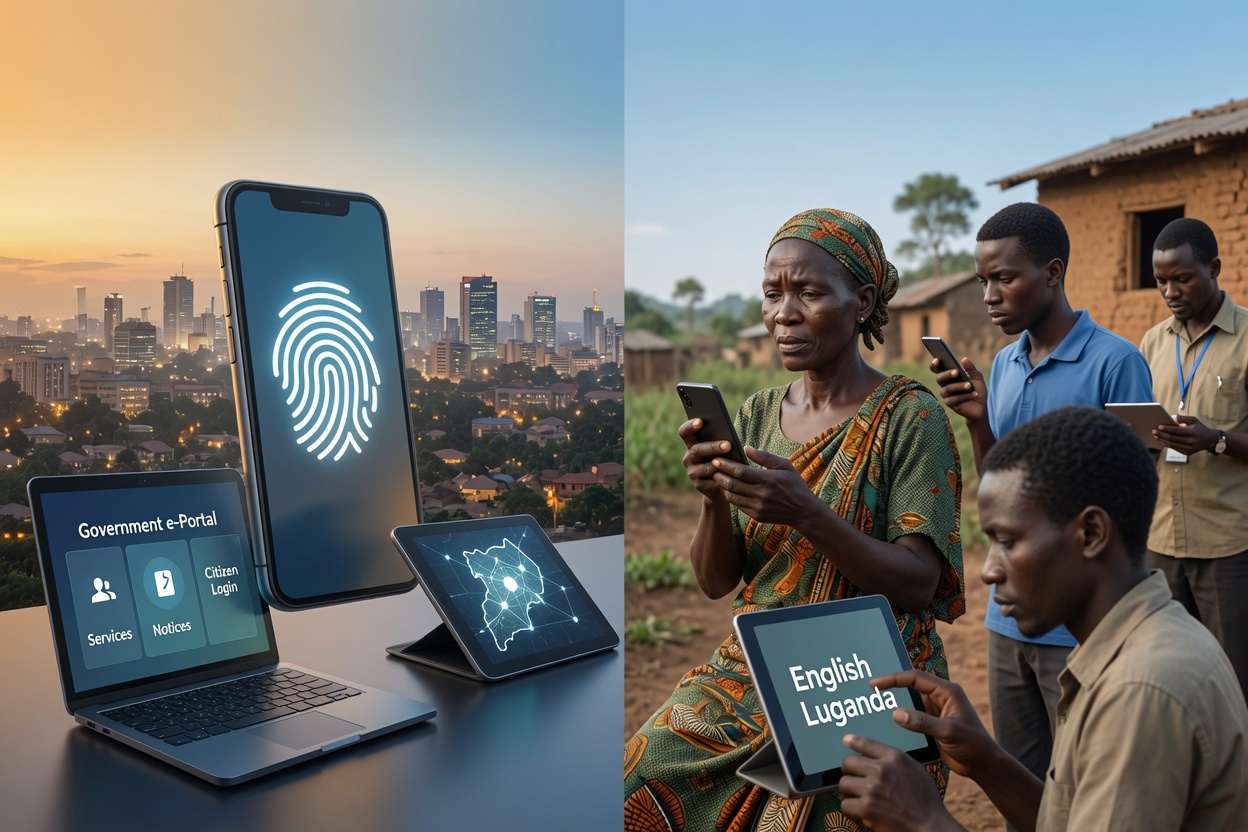
Every day, more government services move online. Mobile money has replaced bank queues. Job applications happen on LinkedIn. Entrepreneurs register their businesses on e-government portals. Uganda’s digital transformation is real — and it is accelerating.
But acceleration is not the same as inclusion. And for millions of Ugandans, the digital economy is not arriving. It is passing them by.
In rural Masindi, a farmer cannot access real-time weather alerts because she has never learned to use a smartphone. In a Kampala slum, a talented school leaver cannot apply for a tech job because he has never been taught to type, let alone write code. In a refugee settlement in the north, a community health worker cannot upload patient data because the interface is in English and she reads Lugbara.
These are not edge cases. They are the majority.
According to the Uganda National Information Technology Authority, internet penetration remains concentrated in urban areas. The people most dependent on government services — the rural poor, women, persons with disabilities, displaced communities — are the least likely to be equipped to access them digitally.
The cost of this gap is not abstract. It is measured in missed diagnoses, failed businesses, and young people locked out of the fastest-growing sector of the economy.
At Novus Innovation Initiative, we believe that the digital revolution must not replicate the inequalities of the past. Technology should be a bridge, not another wall. That is why our Digital Skills Training programme takes digital literacy to the communities that need it most — not as charity, but as economic empowerment.
If Uganda is going to grow, it needs all of its people growing with it. The question is not whether to include the marginalized in the digital economy. The question is how fast we can move.
The time to act is now. Go for it.
